we have not reached peak cyborg
By Tess |
May 01, 2026
ontology
let's suppose there are two fundamental building blocks of complex systems, which combine to create a third type of entity.
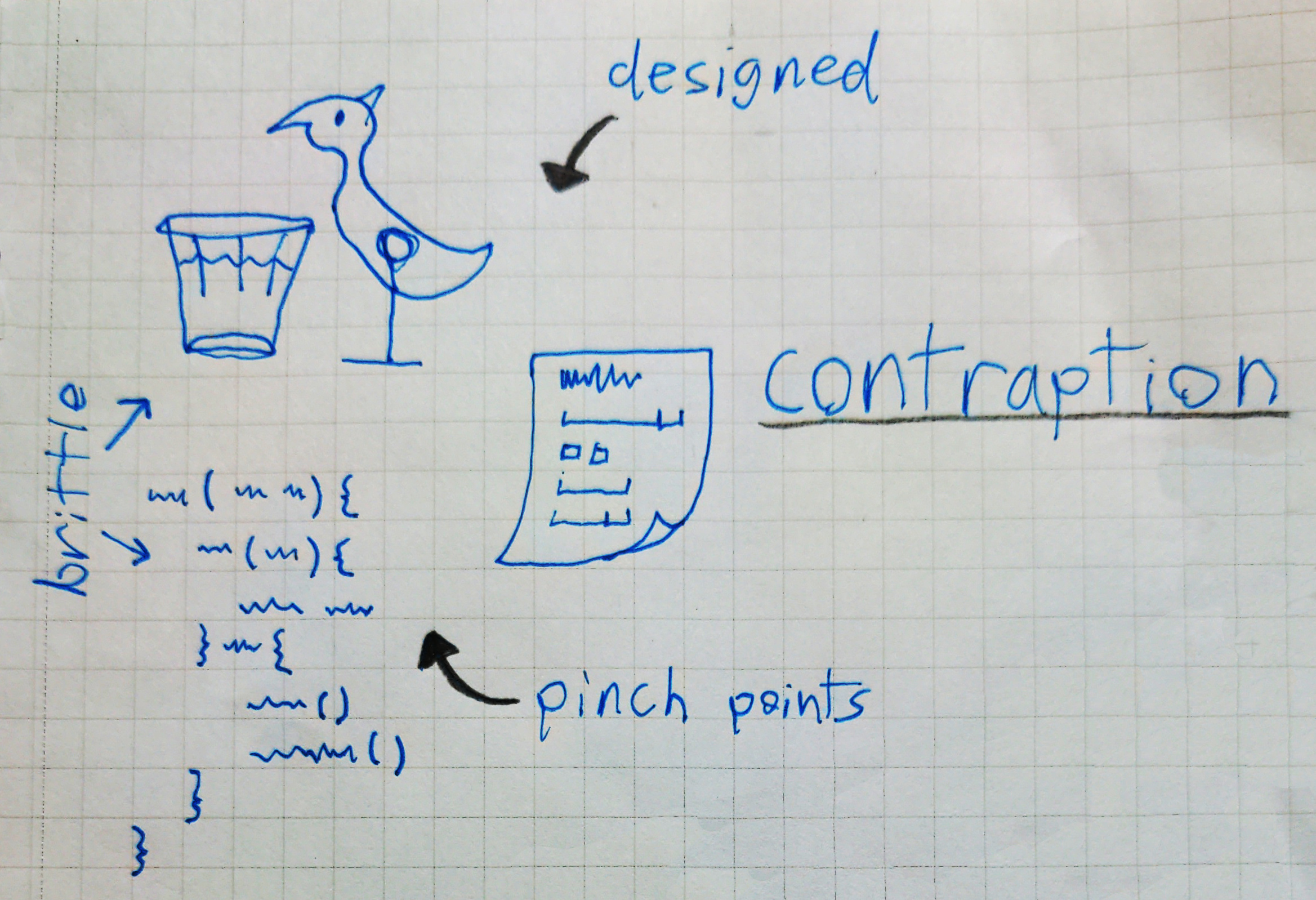 contraptions are things like rockets, computer programs, bureaucratic processes, those little birds that bob up and down and seem to be perpetual motion machines but are actually powered by evaporation or some shit. contraptions are brittle, but efficient at what they do. they can be designed, decomposed, combined and otherwise reasoned about.
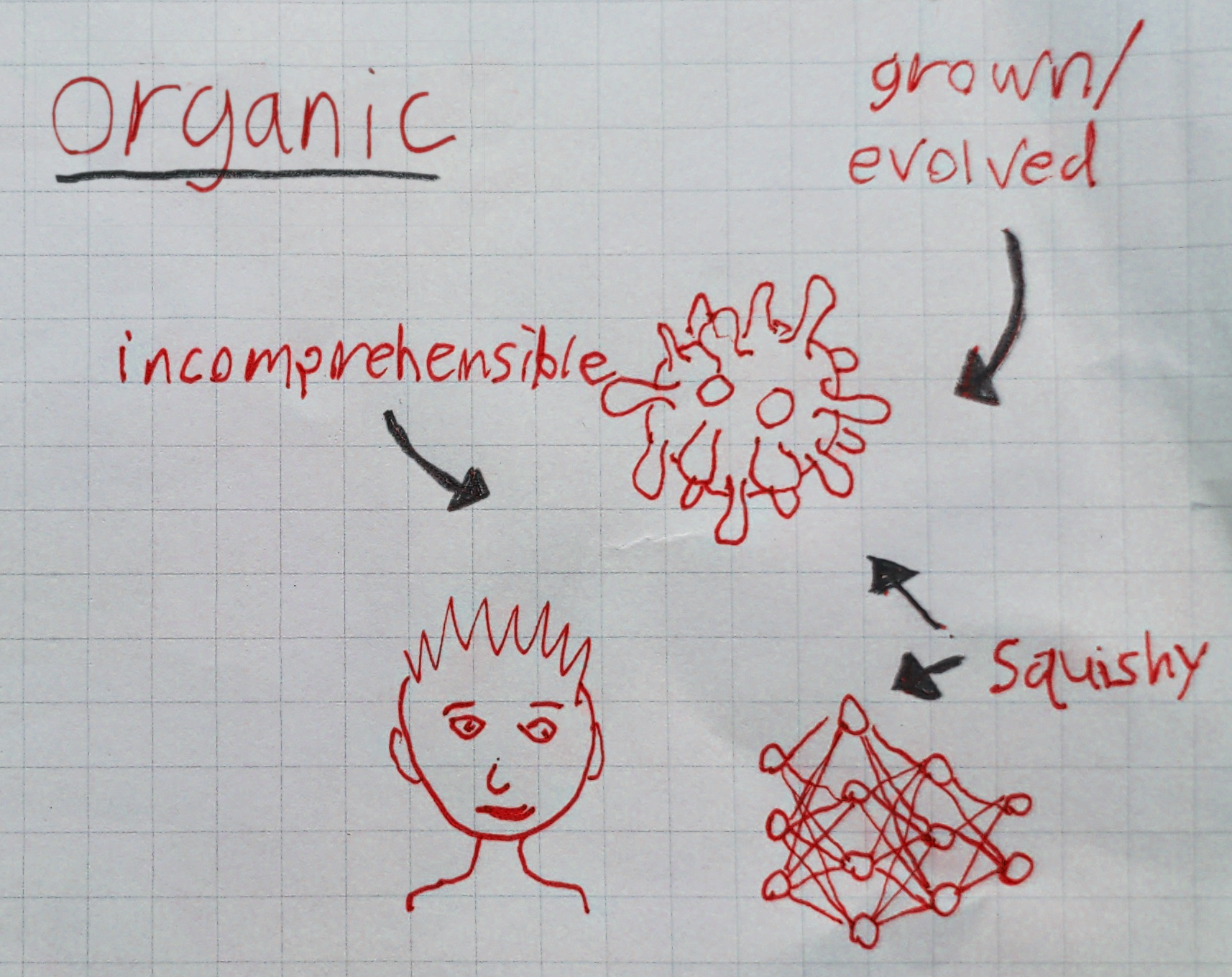 cells, squirrels and humans are organics, but so are viruses, hurricanes and ML models. organics lose some efficiency, but make up for it in robustness. organics must be evolved or grown, not designed. they don't fit into simulations well, and they must learn instead of being debugged/modified.
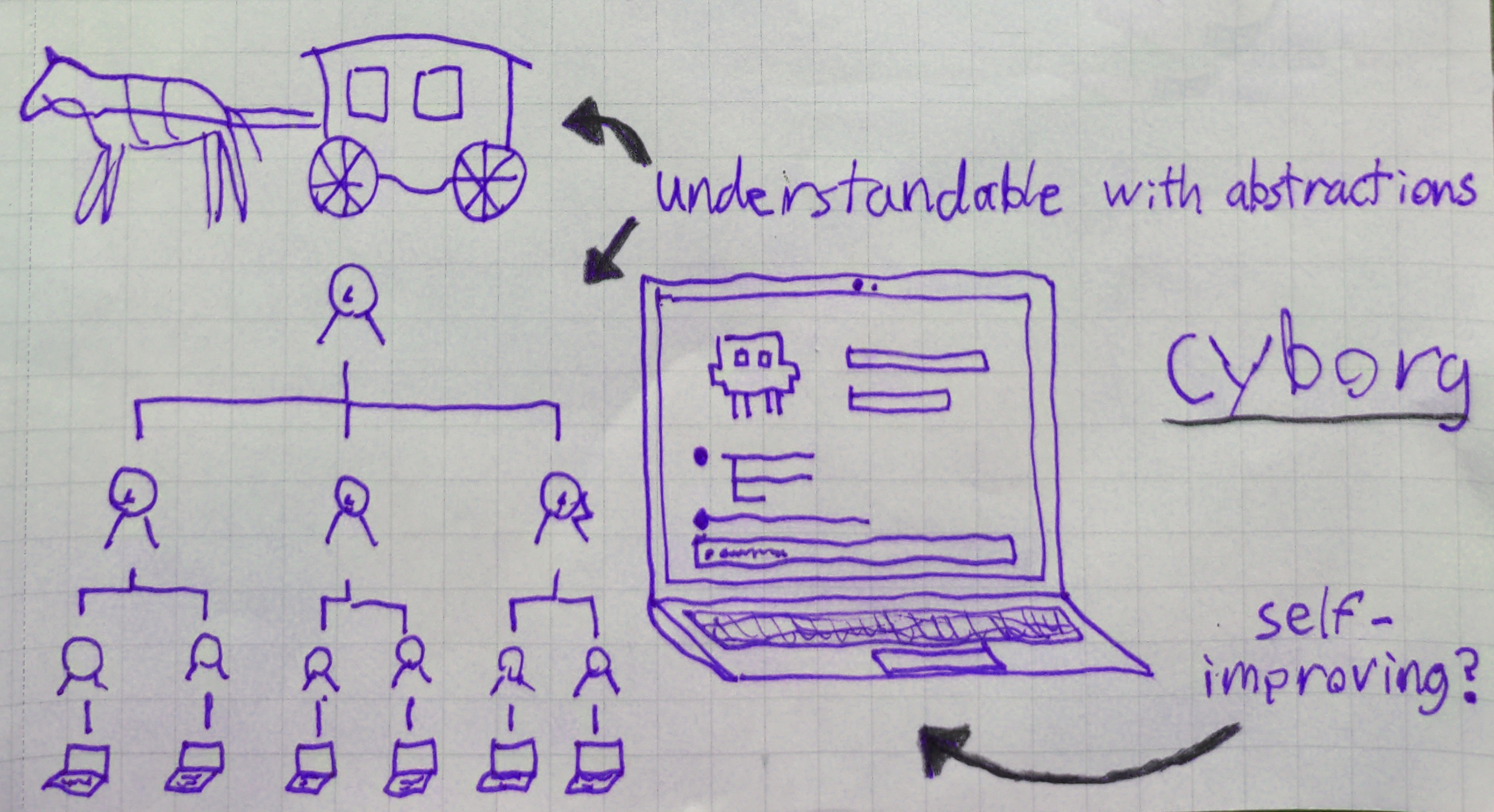 cyborgs are systems built out of both contraption and organic components. cars and computers (when considering the driver/user as part of the system) have a judgment organic steering a contraption that does the work. horse-drawn carriages, corporations and computers running LLMs stick organics under the contraption layer while keeping a human organic on top.
the problem is you can't design a purpose-built organic or grow a contraption with the ideal interface layer, so cyborgs are always clumsy hacks. the pieces don't fit together perfectly, but they compensate for each other's inadequacies enough to make up for it.
bitter lessons
the bitter lesson is about a specific cyborg architecture consistently winning over the last few decades. when you stick a digital organic inside a software contraption it tends to outperform any sort of pure software given adequate compute.
but! there is another lesson, also bitter, which held true for hundreds of years: when you put physical (and later software) contraptions at the bottom, they win. cars beat horses. calculators beat rooms full of mathematicians. Deep Blue beat Kasparov.
earlier still, pure organics "won" for billions of years. they spread globally and terraformed the planet, until eventually they were sophisticated enough to begin constructing contraptions.
from this, we can tentatively infer a higher-order bitter lesson: advances are made by discovering new, increasingly complex cyborg architectures. taller contraption-organic stacks beat shorter ones, once they can be made functional. we do not converge on a small area of system design space, but instead use each cyborg architecture to build more sophisticated contraptions and organics, from which yet more complex architectures can be constructed.
the cyborg frontier
we now have CEOs leveraging bureaucracies to organize engineers operating agent harnesses driven by LLMs making tool calls controlling computers. many of these components could only have been built by a cyborg entity nearly as complex. these systems are self-improving at rates never before seen, but we should also expect the evolution of the fundamental architecture to keep speeding up.
where does this go in practice, and what does it mean for the layers still implemented in flesh? I guess we have to wait a few months to find out.